
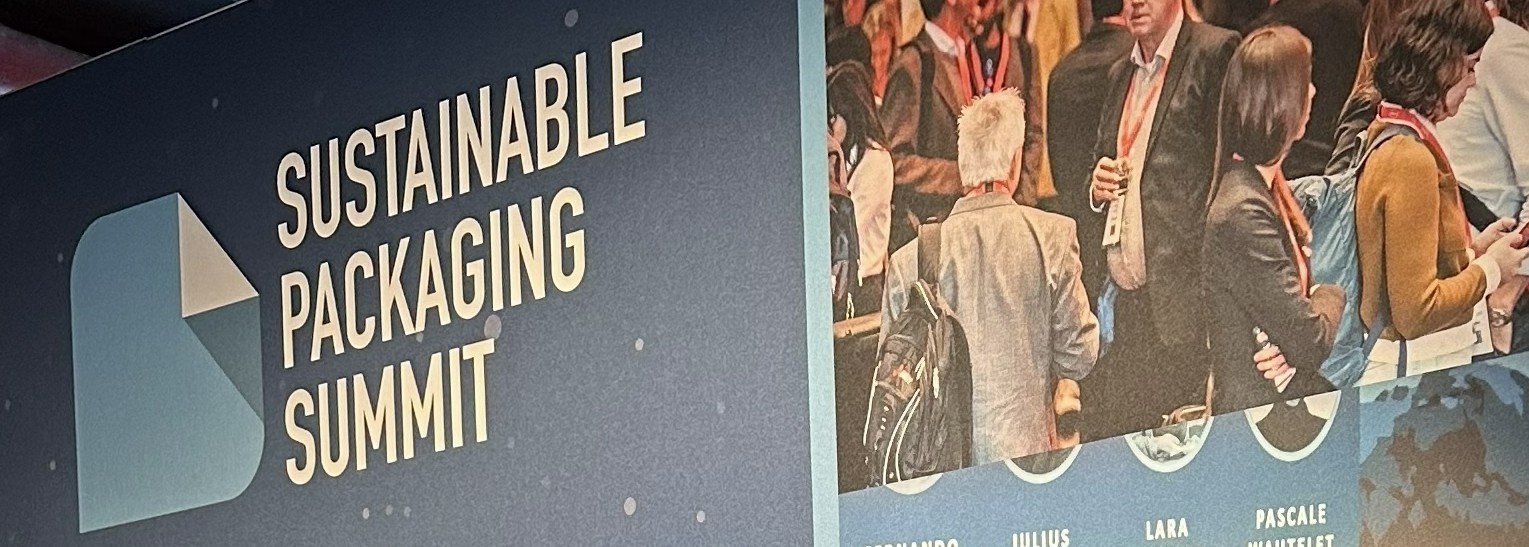
Ecohelix attended the Sustainable Packaging Summit 2026 in Utrecht, the Netherlands, one of Europe’s leading meeting places for the packaging value chain. Over two intense days, Daniel Jonsson, Sales Manager, and Jari Oinonen, MarCom Manager, met material producers, paper and board manufacturers, converters and brand owners. All of them were asking the same question: how can we make packaging more sustainable, together?
Key takeaways from the summit
- Demand is high, but system change is hard. Demand for new, more sustainable packaging materials is high, but changing the system is still difficult.
- The 2030 gap. The targets of the EU Packaging and Packaging Waste Regulation (PPWR) are ambitious, and the real challenge is closing the gap between now and 2030.
- Unclear signals. Extended producer responsibility (EPR) schemes are still fragmented across countries. They give no clear signal to guide material selection, and their final effect remains unclear.
- From willingness to offtake. The willingness is there. Turning it into concrete offtake needs faster commitments and more risk tolerance across the whole value chain.
How do new solutions become mainstream?
This was the big question of the summit. One message came through loud and clear: the industry needs to innovate and promote sustainability without sacrificing competitiveness. That is quite a request, but it is achievable with strong collaboration.
This is exactly what Ecohelix works for with WOODMER® Seal, a wood-based heat-seal coating that helps paper replace plastic in more packaging applications.
“We had valuable discussions with partners across the whole value chain, and we are looking forward to continuing them,” says Jari Oinonen, MarCom Manager at Ecohelix.
Co-funded by the European Union. Views and opinions expressed are however those of the author(s) only and do not necessarily reflect those of the European Union or CINEA. Neither the European Union nor the granting authority can be held responsible for them.